
Measurement before conviction
Aging research has never lacked plausible stories. It has lacked the depth of measurement needed to tell which of them are true.
About
Cornaro.ai turns scientific breakthroughs in aging and healthspan into decisions that partners can act on.
01
Mission
We build models that carry a finding across species, from the animal to the patient, and the evidence that a pharmaceutical or biotech programme needs to decide what to do with it.
Medicine has become very good at treating individual diseases of later life and much less good at addressing the process that produces all of them. That process is tractable: it is measurable, it varies between individuals for reasons that can be traced to biology, and it responds to intervention.
Developing interventions of our own is a possibility further out. It is not a near-term aim, and we would rather say so than imply otherwise.
02
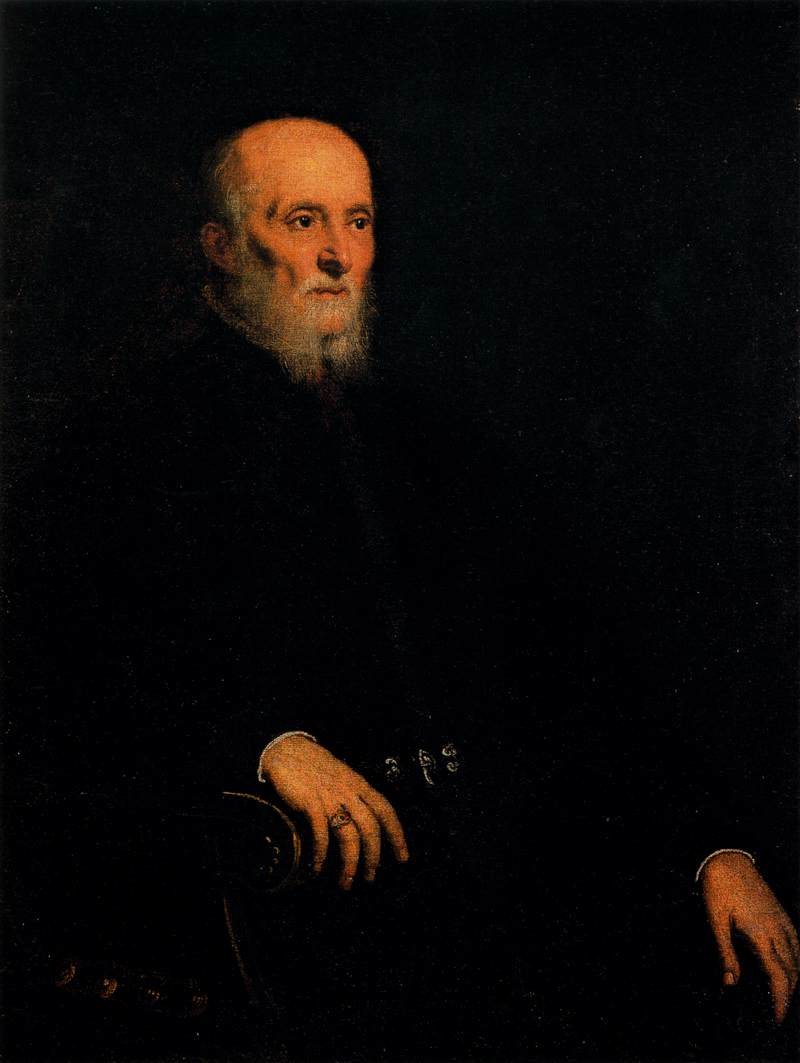
Alvise (Luigi) Cornaro
1484-1566, Venice and Padua
Jacopo Tintoretto, c. 1560-65. Galleria Palatina, Florence. Public domain.

Written in 1558 and added to until he was nearly a hundred. This is the 1616 Rome printing by Giacomo Mascardi, digitised by the Getty Research Institute.
Open the 1616 editionat the Internet Archive, opens in a new tabCornaro was, in effect, the first quantified-self practitioner: he treated his own body as a system to be understood, monitored and tuned, and he recorded the results.
The Venetian nobleman of the late Renaissance wrote Discorsi della vita sobria in 1558, past eighty, and extended it into his late nineties. Its argument was extraordinary for its time: a long and vigorous life is not a gift of fortune but the consequence of disciplined, measured, evidence-based choices.
The Renaissance was the age that learned to measure. Anatomy, astronomy, the geometry of perspective: a century of discovery that came less from any single instrument than from a new willingness to look and to record.
The .ai in our name says we think artificial intelligence is that kind of instrument for our own century, on a scale of biological data that Cornaro could never have imagined, and that aging is the question waiting for it.
03
Principles
Aging research has never lacked plausible stories. It has lacked the depth of measurement needed to tell which of them are true.
Computation is an instrument, not a substitute for knowing which tissue, which timescale and which phenotype actually matter.
A result that cannot cross into human biology is not a result. We cross-validate against human cohorts from the outset, not at the end.
Healthspan research is measured in lifespans, not quarters. We prefer datasets that took twenty years to build and claims that will still be true in twenty more.
04
Partnership
We supply the biology and the scientific judgement. Natural Constant supplies the AI and the engineering.
Neither half does the job alone, which is the reason for the arrangement rather than a footnote to it.
Get in touch